Digital Products · System Development
Connecting Culture, Water and Place
A connected system called Muní, designed to ease pressure on Agrigento’s water infrastructure by redistributing tourism across the territory.
- SCHOOL
- CONTEXT
- TEAM
- DURATION
- YEAR
What needed to be solved.
The project began with one broad challenge: Water Scarcity in Sicily.
Our task was to explore how design could contribute to improving the situation. Through our initial research, we found a strong connection between water scarcity and tourism in Agrigento. Visitor activity is heavily concentrated around a few major cultural destinations, while many inland places remain less visited and less connected.
The challenge was not simply to bring more visitors to lesser known places. It was to create a connected system that could encourage a more balanced movement across the territory, while helping cultural sites respond to the water needs that come with increased visitation.
The goal was to improve the situation without simply moving the pressure somewhere else.
What I learned.
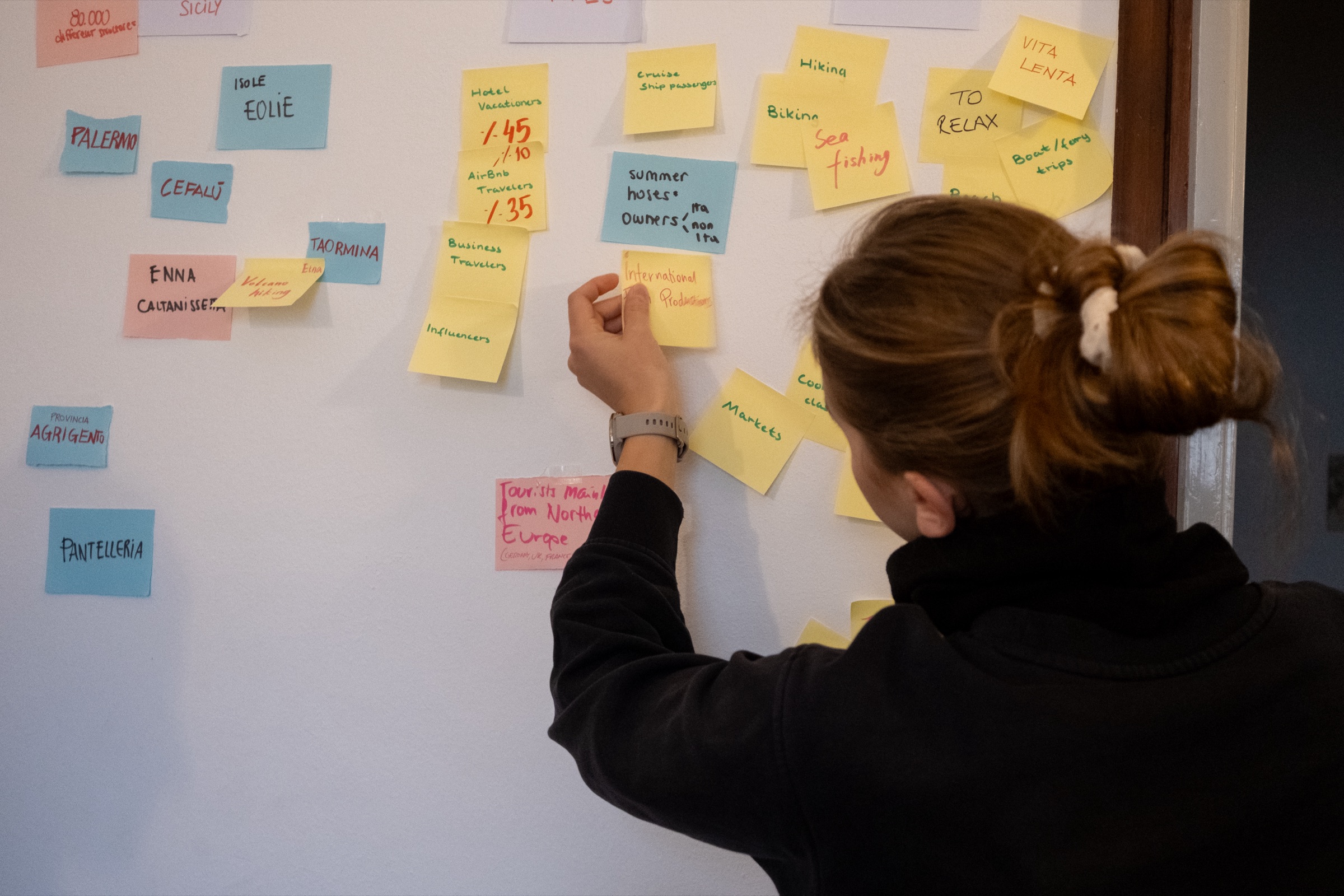
We first explored existing research, data and strategies around water scarcity, tourism and the territory. This gave us an understanding of where the main tensions existed and helped us identify what needed to be investigated further.
We then travelled to Agrigento and conducted an ethnographic field study across cultural sites in Agrigento, Favara, Santo Stefano Quisquina and Sant’Angelo Muxaro. We spoke with cultural site workers, institutional actors and local people, while experiencing the territory from a visitor perspective.
The territory was fragmented.
Water availability was uneven.
The physical and digital experience needed to work together.
What I decided.
Create a connected territorial system that combines digital guidance, cultural sites and physical water infrastructure.
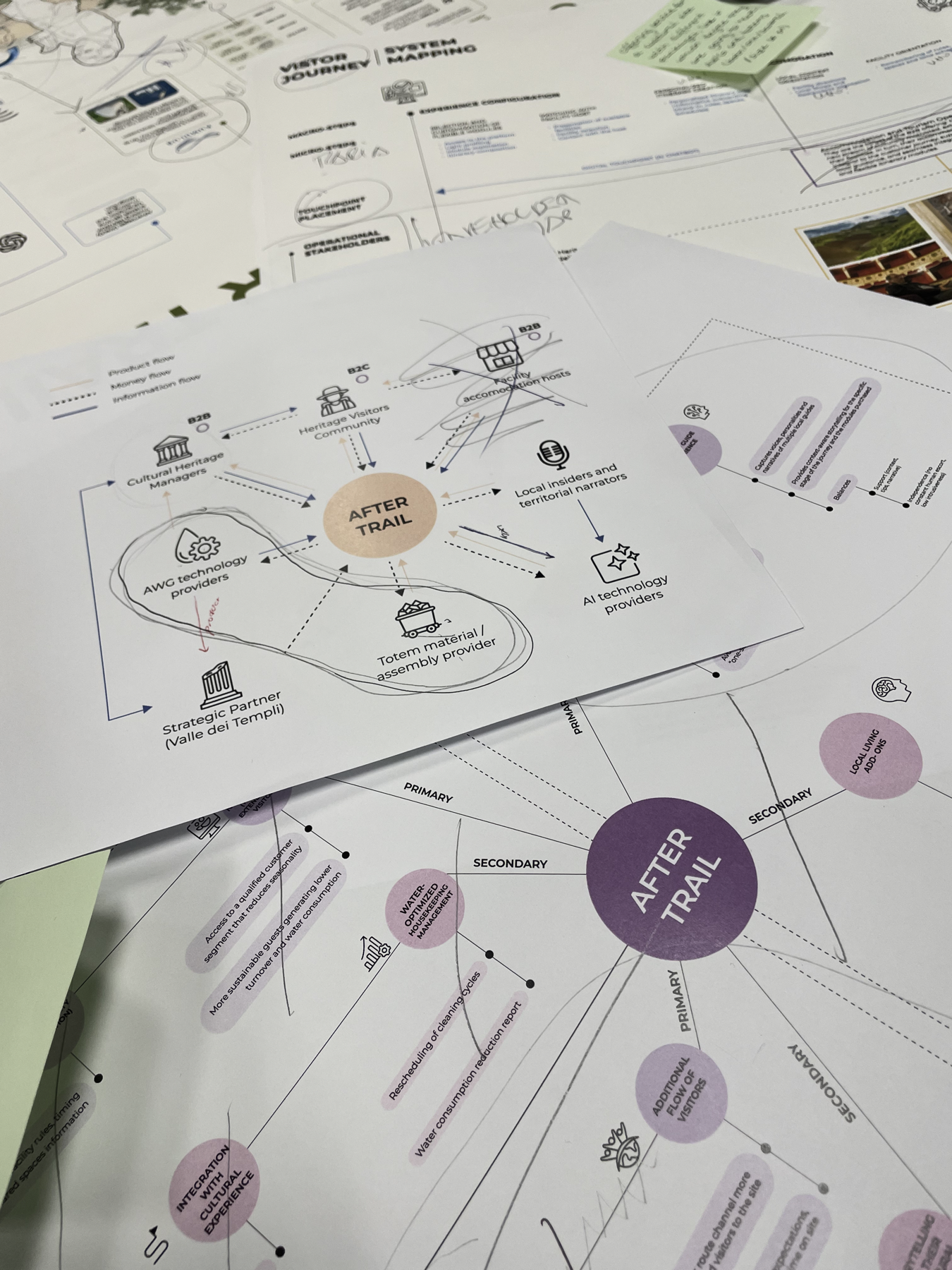
The system was built around three connected elements:
Visitor App
Manager Website
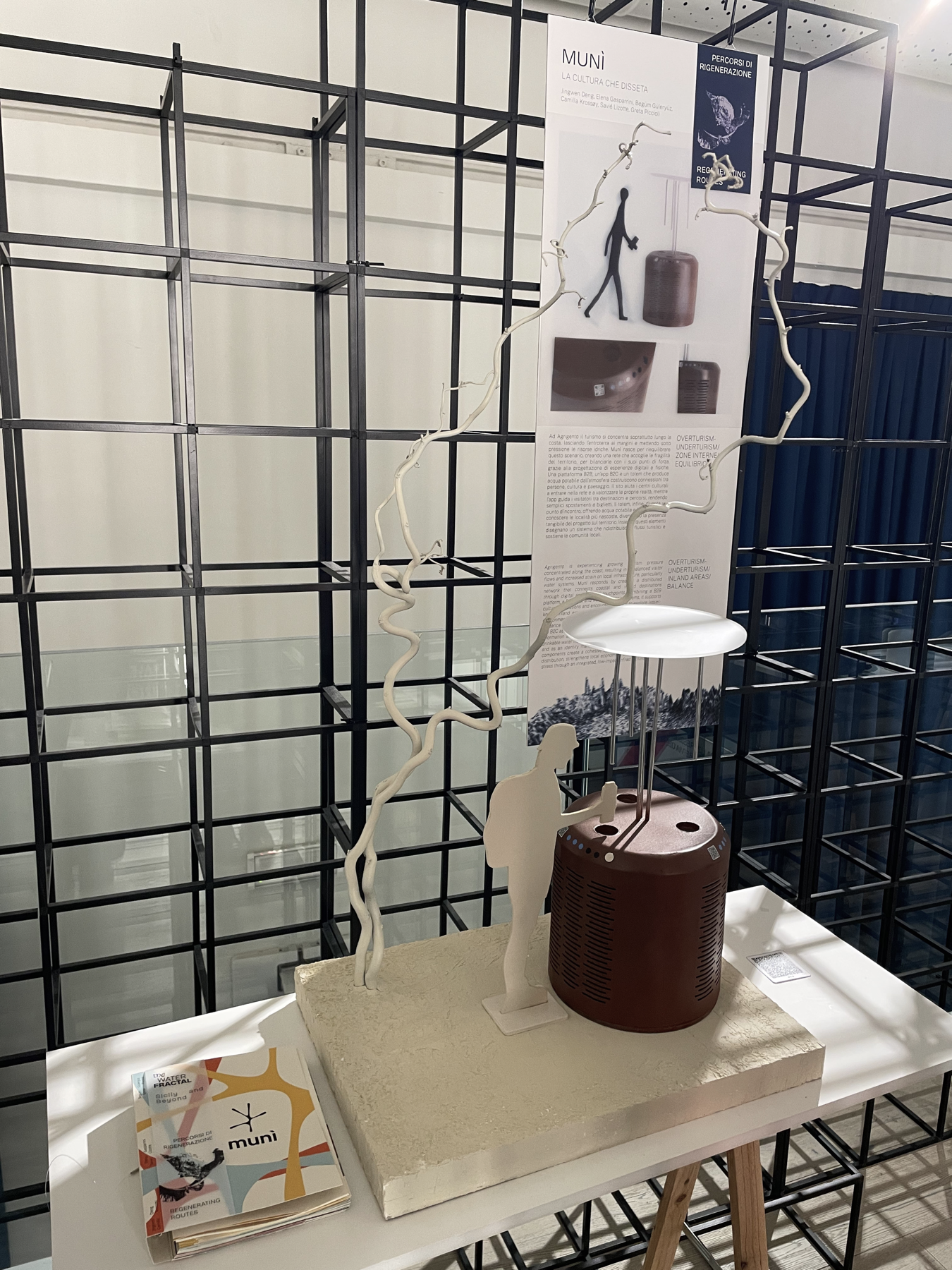
Water Totem
Together, these elements turn the system from a collection of separate touchpoints into one connected experience.
Why I decided it.
Design the system before the interface
Why
What it meant
Connect movement with infrastructure
Why
What it meant
Make the system easier to enter
Why
What it meant
What I designed.
The interface is the result of the system work that came before it.
The final design focused on two digital platforms, a visitor app and a manager website. Both were designed around the physical water totems and the relationships between visitors, cultural sites and the wider territory.
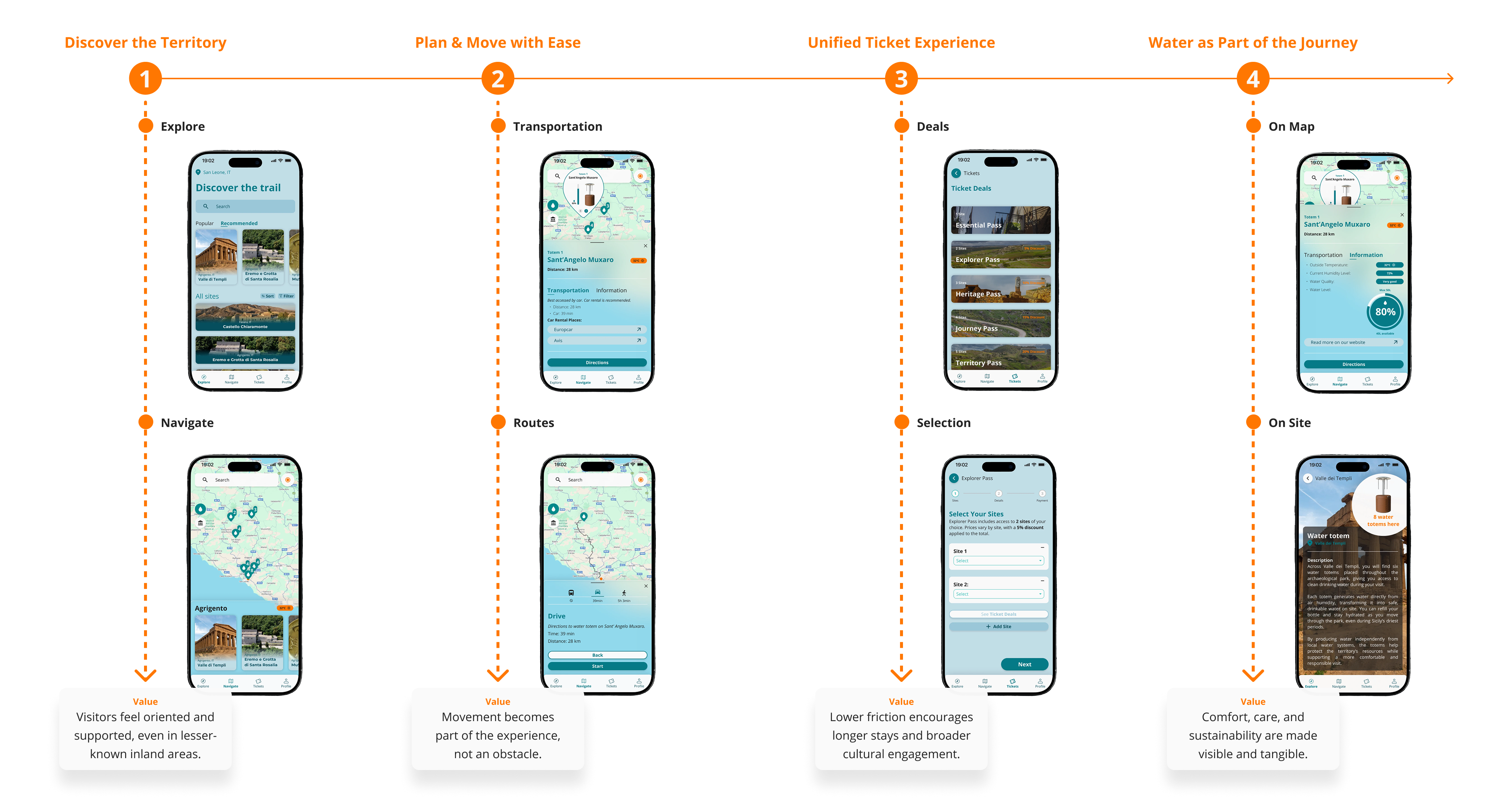
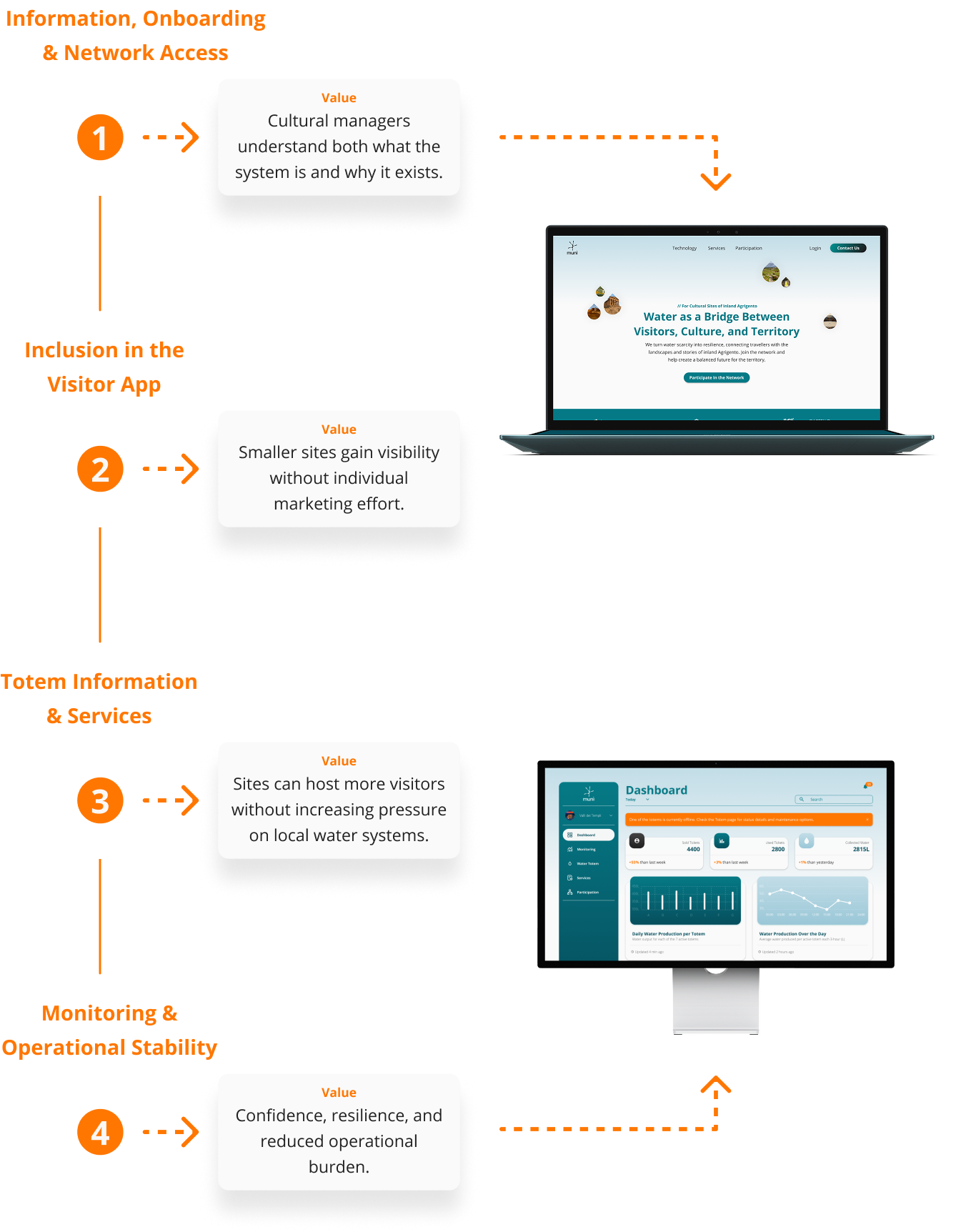
Core features
Visitor App
Planning and Navigation
Unified Ticketing
Manager Website
The digital design was therefore not created as a standalone interface. It was designed to make the relationships established in the system understandable and usable.
What changed.
The project developed Munì as a connected system for addressing several pressures created by water scarcity and tourism in Agrigento.
Rather than treating water, tourism, mobility and cultural access as separate problems, the system connects them through shared infrastructure and digital services.
The result is a model where visitors can discover and move between more cultural sites, smaller destinations can become part of a wider network, and access to drinking water can be provided without relying on local water sources at each site.
The final outcome was a complete system concept supported by a visitor app, manager website and physical water totem.
The interface is the result. Understanding is the work.
Most of the important decisions in this project happened before the screens.
We did not start by deciding that the solution should be an app, a website or a physical product. We first had to understand what would need to exist for the system to actually work.
That changed the way I approached the design. Instead of asking what should be made, I found myself asking what was needed to achieve the goal, and how the different parts had to work together.
The app and website became the visible result of that process. They were only two of the building blocks needed to make the wider system work.